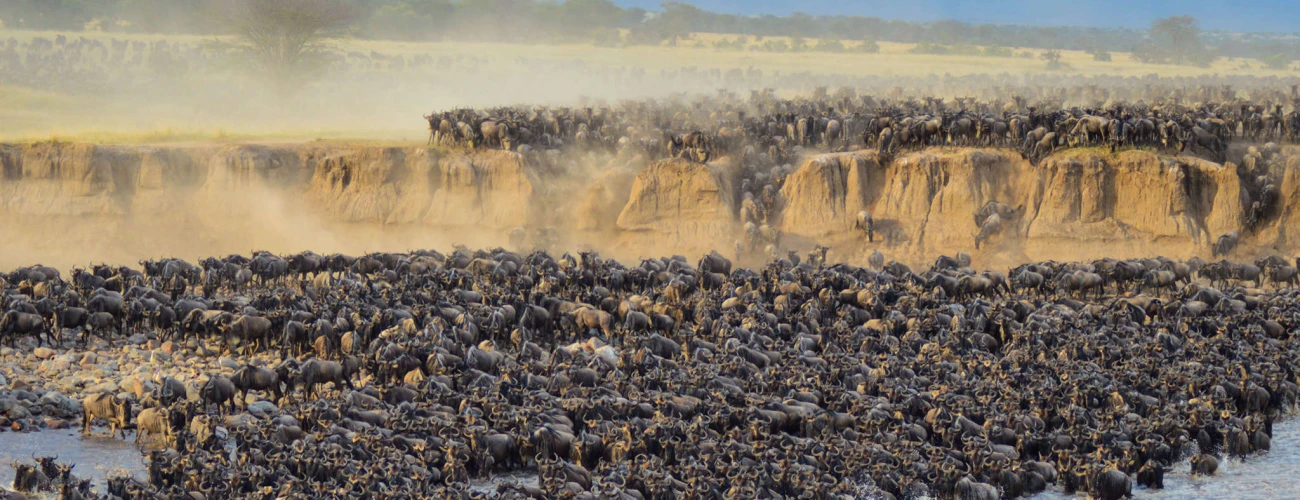
Four Wildlife Migrations That Define the True Safari Experience in Tanzania
Tanzania is not static wilderness. It is a land in motion, shaped by rainfall, instinct, and survival. Every year, animals move with purpose across plains, lakes, and river systems, following rhythms far older than maps or borders. These migrations are not simply events to witness. They are stories of endurance, renewal, and balance.
At Just Go Safaris, we view migrations as the highest expression of safari. They reveal wildlife as part of a living system rather than isolated sightings. Timing matters. Location matters. Understanding matters even more.
These are the four most powerful animal migrations to witness in Tanzania.
The Great Wildebeest Migration of the Serengeti
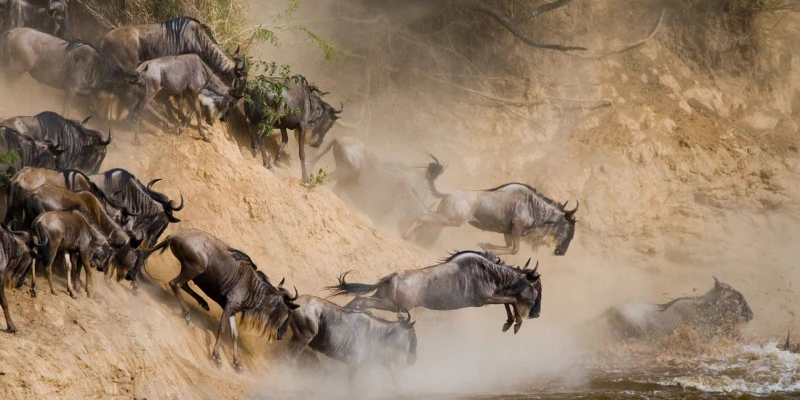
There is no wildlife movement on Earth that compares to the Great Wildebeest Migration. More than a million wildebeest, accompanied by zebra and gazelle, move continuously across the Serengeti ecosystem in search of fresh grazing and water. This is not a straight journey, but a never-ending loop driven entirely by rain and instinct.
In Tanzania, the migration reveals its most intimate and emotionally charged moments. From January to March, the southern Serengeti becomes a cradle of life. Thousands of calves are born within a short window, filling the plains with energy and vulnerability. Predators gather, drawn by opportunity, creating intense and constant interaction.
As the seasons change, the herds move north through central and northern Serengeti, navigating rivers and open plains. These movements are slow, deliberate, and powerful, offering a deeper understanding of how survival shapes behaviour.
Best time to experience
January to March for calving in the southern Serengeti
June to October for large-scale movement and river crossings in northern Serengeti
The Zebra Migration of Southern Serengeti
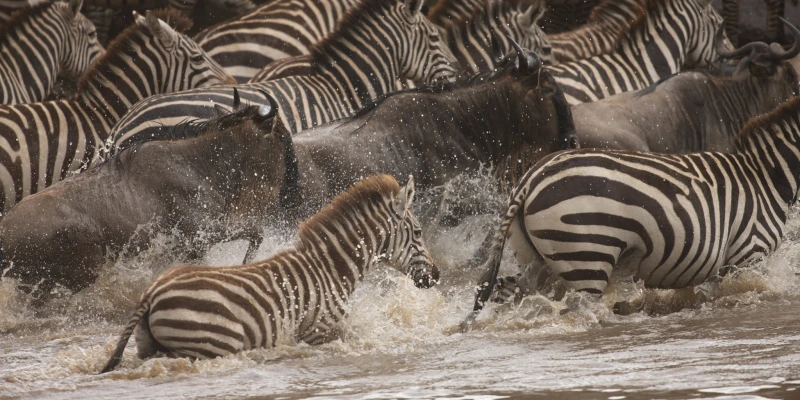
Before the thunder of wildebeest hooves arrives, zebra often lead the way. Their migration is quieter, more structured, and visually striking. Large herds move in long, flowing lines across open grasslands, their black-and-white patterns creating one of the most photogenic scenes in African wildlife.
Between December and February, the southern Serengeti and Ndutu region become a focal point for zebra movement. The nutrient-rich grasses support large herds, while the open landscape allows uninterrupted viewing.
Zebra play a critical ecological role. By grazing tougher grasses first, they prepare the land for other herbivores, making their migration essential to the health of the entire Serengeti ecosystem.
Best time to experience
December to February in the southern Serengeti and Ndutu area
The Flamingo Migration of Northern Tanzania
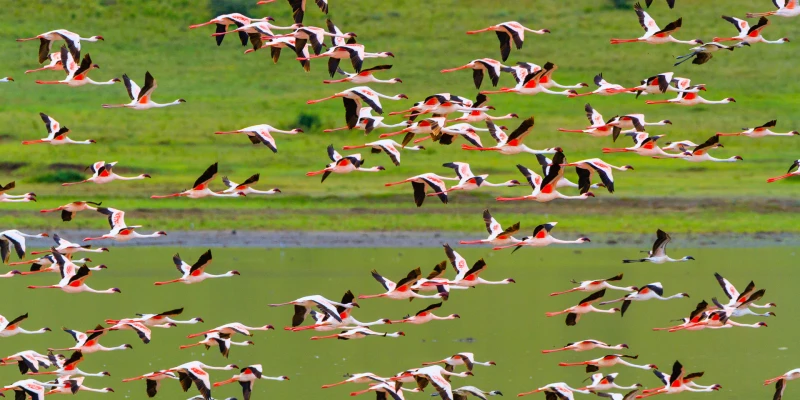
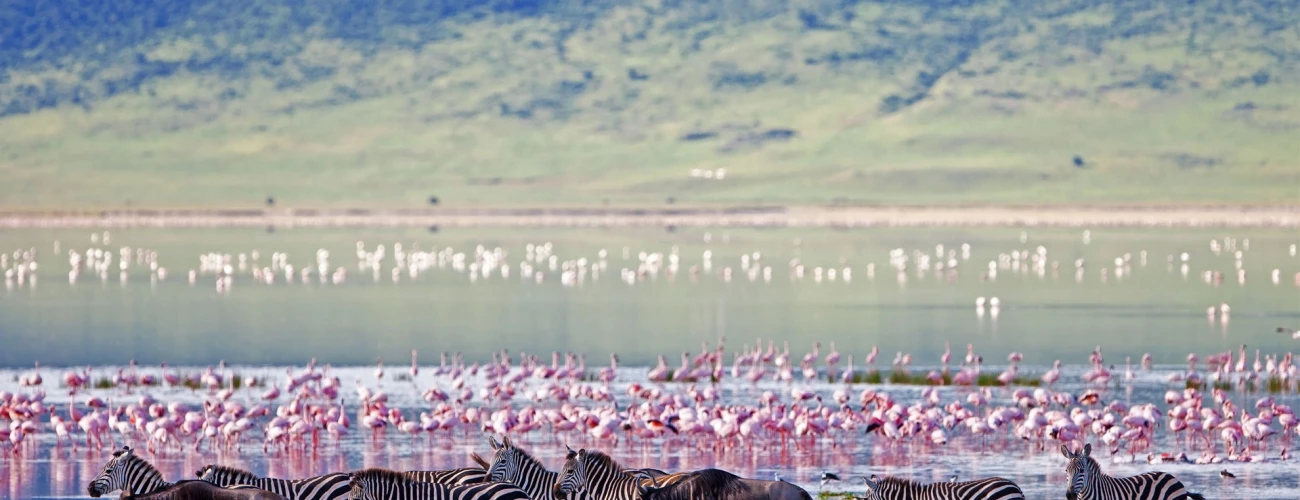
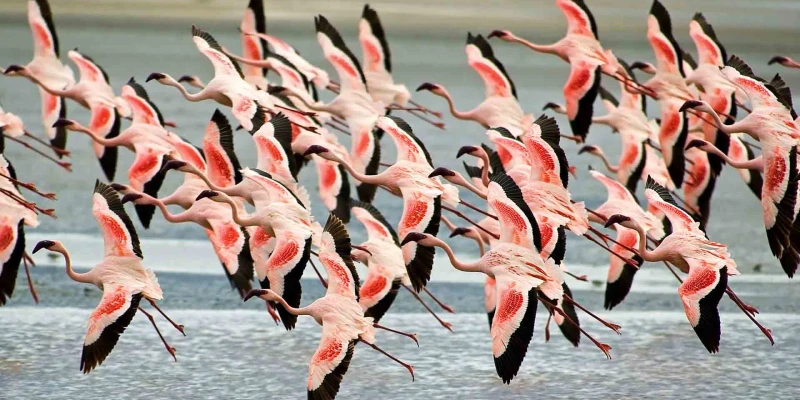
The flamingo migration is one of Tanzania’s most visually poetic natural events. Driven by water levels and algae blooms, millions of lesser flamingos move between soda lakes, transforming stark volcanic landscapes into fields of soft pink.
Lake Natron stands at the heart of this movement. Its mineral-rich waters provide critical breeding grounds when conditions are right. Surrounded by dramatic escarpments and volcanic peaks, the setting feels otherworldly, offering a striking contrast to classic savannah safaris.
This migration is not about speed or drama. It is about colour, rhythm, and scale. It adds a quieter, more contemplative dimension to a Tanzanian journey.
Best time to experience
Varies with water conditions, commonly between June and October
Breeding activity often peaks from September to November
The Elephant Migration of Tarangire
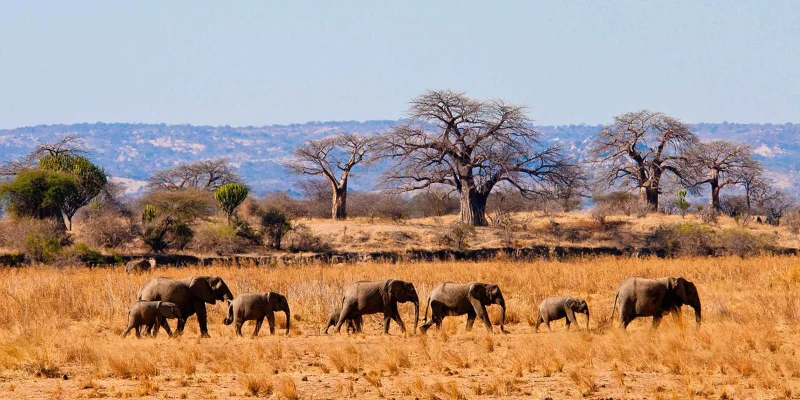
Tarangire National Park hosts one of Tanzania’s most emotionally powerful seasonal movements. As the dry season intensifies, elephants travel from dispersed ranges toward the permanent waters of the Tarangire River and Silale Swamp.
By mid-year, the park becomes a meeting place for generations. Matriarchs guide extended families along ancient routes. Calves stay close, learning paths passed down over centuries. The movement is slow, deliberate, and deeply social.
Unlike faster migrations, this journey is about memory and leadership. Watching elephants arrive from different directions and settle together offers rare insight into their intelligence and bonds.
Best time to experience
June to October during the dry season in Tarangire National Park
Why Migration Safaris Leave a Lasting Mark
Migration shows wildlife in decision-making, interaction, and transition. It reveals not just where animals are, but why they move and how the land shapes their choices. These moments cannot be rushed or staged.
For photographers, migrations bring light, drama, and unpredictability. For wildlife lovers, they bring understanding. For travellers, they bring perspective and humility.
At Just Go Safaris, we design migration journeys around natural rhythms, not fixed itineraries. We follow rain patterns, wildlife movement, and seasonal behaviour to place our guests where the story is unfolding naturally.
Migration is not something you chase.
It is something you wait for, understand, and experience fully.
This is Tanzania in motion.
This is safari with meaning.
Just Go Safaris
Travel with understanding. Explore with purpose.